This spring, Oleh Doroshchuk made history by winning Ukraine’s first-ever world indoor title in the men’s high jump. Earlier, he had also secured the country’s maiden European indoor gold in 2025. The 24-year-old is an Olympic finalist (6th in Paris), a World Championships finalist (4th in Tokyo), a European Championships bronze medallist (Rome 2024), and a two-time Diamond League Final silver medallist.
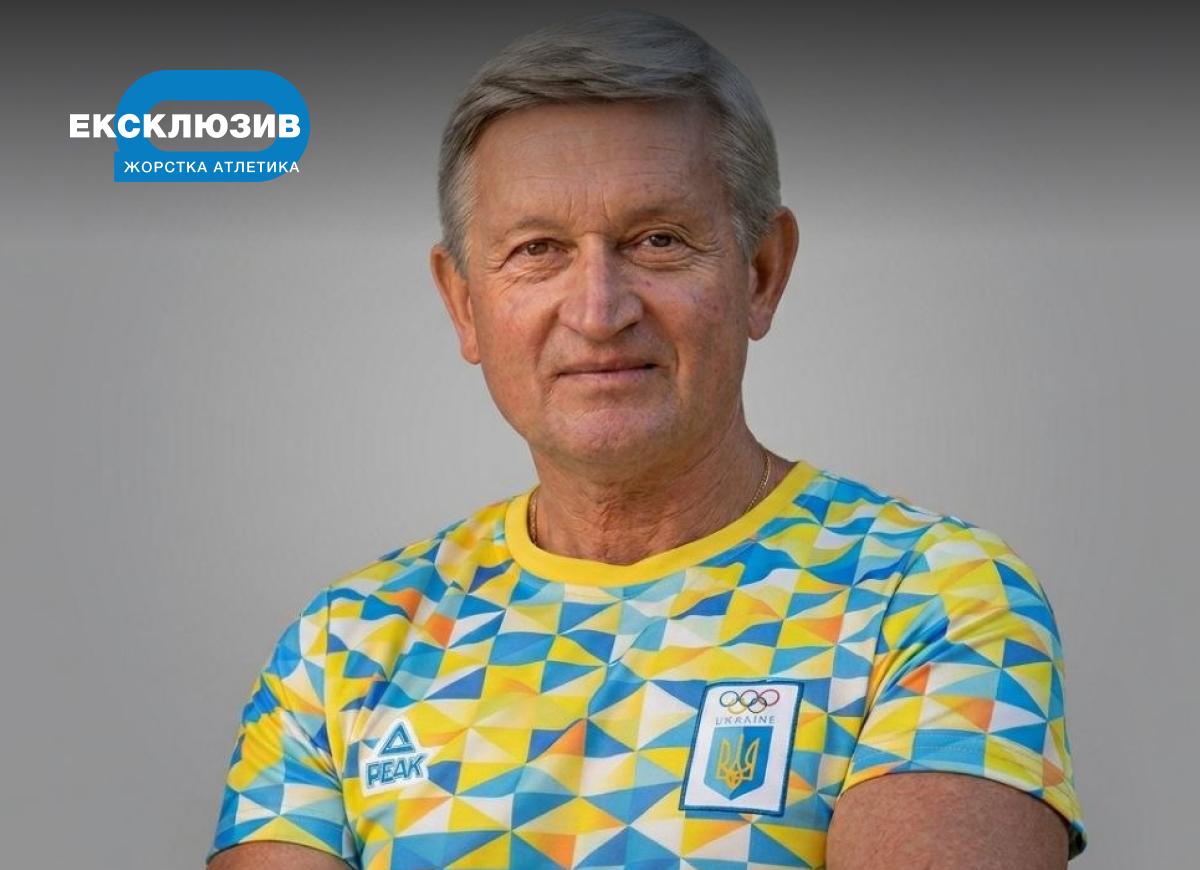
Behind that success stands Honoured Coach of Ukraine Hennadii Zditovetskyi. In an interview with Zhorstka Atletika, he reflects on Doroshchuk’s journey, the psychology of winning and losing, his 2.40m potential, and the realities of modern athletics.

“Ten days before the Worlds, he lost the feeling of the jump”
— What did it feel like to prepare a world champion?
“Of course, the emotions are positive. What else could they be? But at my age, I take it all more calmly. Whenever there’s an achievement, I immediately think about what comes next — what needs to be done so tomorrow is not worse than today, but better. There was no euphoria. Honestly, the national team head coach was happier than I was.”
— Were you nervous during the competition? How would you assess Oleh and his rivals?
“To be honest, Oleh wasn’t in his best shape. The last two technical sessions didn’t go well. His mood wasn’t great either. But I knew he has the ability to focus when it matters. He already had experience — a European champion, competing at his third World Indoors. I believed he could medal. I told him beforehand that 2.30–2.32 would likely be enough for the podium. I hoped for a medal. Gold? I wasn’t certain, but I allowed for that possibility if things went right.”
— What exactly was the issue — fitness, health?
“No, physically he was fine. All test indicators were good. The problem was technical — mistakes in execution. Ten days before the competition, he told me: ‘I don’t feel the jump like I did at the Ukrainian Championships.’ That worried me. I gave him two days off — maybe he was slightly overtrained. Then we went to Poland, he did a couple of light sessions, and already in the warm-up jumps I could see things were back on track.”
“The main rival was Sanghyeok WOO”
— Who did you consider the main contenders, may be Jan Štefela?
“I didn’t see Jan Štefela as the main rival. He’s talented, but often struggles under pressure. He performs best when others underperform, but when he feels pressure, he tends to fade.
The main rival, in my opinion, was Sanghyeok WOO. I also considered a Polish athlete, though not strongly. And, as always, there’s the possibility of a ‘Mr X’ — someone unexpected. This time, it was the Mexican athlete who set a personal best at exactly the right moment.”

“I didn’t take him right away”
— You’ve worked with Oleh since 2017. Did you immediately see world champion potential?
“He came to me himself. Before that, he did taekwondo, then a couple of years in athletics. His personal best was 1.80m. I didn’t want to take him at first, but I liked his build — tall, slim. He started growing rapidly around 16–17.
We spent six months deciding whether to work together. Eventually we did — and I’ve never regretted it. In a year and a half, he improved from 1.80m to 2.15m. That’s huge progress — from a second-category athlete to Master of Sport. Very few manage that.”
— Do you remember when his first major result came — at youth or junior level?
“He started training with me in 2017, and already in 2018 he won the Ukrainian Youth Championships, took silver at the European Youth Championships, and claimed bronze at the Youth Olympic Games in Buenos Aires.
So it happened very quickly: he was a medallist at youth level, then a medallist at the European Championships among juniors, and also at the U23 European level. Essentially, he reached the podium in every age category. He didn’t always win, but he was consistently among the medallists.”
— Was he a hard-working athlete?
“To be honest, not 100%. It often happens that talented athletes are not the most disciplined. He constantly needed pushing. But once he found motivation — when he realised he could achieve big results and after signing a contract with Puma — he began to see his prospects and started working harder and with better quality.”

“A coach is like home walls”
— What is your relationship like?
“More professional. There’s a big age gap — I could be his grandfather. But over time, we’ve grown closer. We understand each other better now.”
— Do you need to talk to him during competitions?
“I usually see everything during warm-ups. If he’s fine, I just show him a thumbs-up from a distance. If he comes over, it’s often for psychological support rather than technical advice. The coach’s presence is like ‘home walls’ — something familiar and reassuring.”
“Medals matter, but results show progress”
— Doroshchuk said he was happy with the medal but not the result. Do you agree?
“We’ve always had this principle: medals are important, but results show real progress. I’ve told him before — winning doesn’t always mean you’re the strongest; sometimes others are weaker.
At major championships, with high pressure and strong rivals, records are rare. Especially since he wasn’t in peak form. Hopefully, we’ll see improvement in the summer.”
“He can jump 2.40 — but everything depends on health”
— Ukraine’s record (2.42m) belongs to Bohdan Bondarenko. Can Oleh reach 2.40+?
“I believe he has the potential. But everything depends on health. Also, you can’t directly compare today’s results with those from 15–20 years ago.
World Anti-Doping Agency regulations are very strict now. Athletes must be extremely careful, even with supplements. That affects performances across athletics. Still, progress is possible with careful, high-quality work.”

“The peak age is still ahead”
— Oleh turns 25 this year. Is that a good age for a high jumper? Is there still room to progress?